Breadcrumb

  1. Home
  2. Documents

Documents

The purpose of this process memorandum is to provide clarification of several perceived discrepancies in water balance that appear in the Draft EIS and supporting documents, and to provide confirmation that these discrepancies are not substantive to the disclosure of impacts in the EIS.

The guide is organized into two sections. The first section provides an introduction with definitions and explanations of Forest Service environmental justice policy. The second section offers information about environmental justice analysis in the NEPA process.

Plant abstract with classification, nomenclature, description and range for Mapleleaf false snapdragon

Slides for webinar presentation on the Phoenix AMA Groundwater Model, it's calibration and 100-year AWS projection.

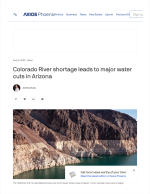
Arizona will have to reduce its Colorado River water usage by 592,000 acre-feet next year, or 21% of its total allotment, the U.S. Bureau of Reclamation announced Tuesday.

COVER ONLY

Materials that meet the criteria of Freedom of Information Act exemptions are not posted on this website. Culturally sensitive materials not posted here fall under this criteria.

The purpose of this process memorandum is to address several measures related to wildlife that are included as required mitigation in appendix J of the final environmental impact statement.

The Scenery Management System presents a vocabulary for managing scenery and a systematic approach for determining the relative value and importance of scenery in a national forest.

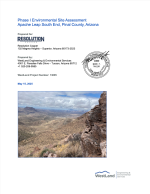
The purpose of this investigation was to assess the Property and surrounding areas to identify the presence or potential presence of recognized environmental conditions (RECs) potentially resulting in environmental impacts to the Property.

Resolution Copper Company commissioned Golder and Associates to establish a program for the collection of baseline surface water data near the future RCC mine and associated facilities.  The intended uses of the data are primarily to support and EIS, develop a sound conceptual site model as a basis for predicting future impacts, and document current conditions as a baseline for judging future impacts.