This report summarizes the meteorological, nitrogen dioxide (NO2), sulfur dioxide (SO2), ozone (O3), and particulate matter (PM) data collected at the Resolution Copper Project near Superior, Arizona for the second quarter, April 1-June 30, 2014.
Baseline Biology and Land Use Report describing a parcel of federal land in the Tonto National Forest. Resolution intends to obtain the Parcel by way of a land exchange with the U.S. Forest Service and to conduct studies to determine the feasibility of establishing an underground copper mine at the site.
Biological baseline studies were conducted related to a proposed tailings alternative within the Tonto National Forest as outlined in a GPO, and related to proposed baseline activities in support of mining exploration activities in the same general area as described in a Plan of Operations.
Resolution Copper Mining LLC (RCML) intends to implement a meteorological and air quality monitoring program to support several efforts during the pre-feasibility and other mine development phases.
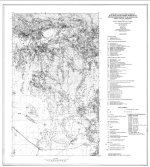
The study area is situated along the southern edge of the Superstition Mountains approximately 40 miles east of the greater Phoenix metropolitan area (Figure 1). Geology is dominated by mid-Tertiary volcanic rocks of the Superior volcanic field (Ransome, 1903), and these rocks depostionally overlie a crystalline basement of early Proterozoic Pinal Schist intruded by middle Proterozoic granitoids. In some areas a relatively thin sequence of the Middle Proterozoic Apache Group occurs along the contact between these two rock types.
This draft technical memorandum has been prepared to summarize hydrogeologic data and provide an assessment of hydrogeologic conditions and water uses in the vicinity of the Whitford, Silver King, and Happy Camp sites (Near West area) for the RCM Tailings Prefeasibility Study (PFS).
The Land and Resource Management Plan (Forest Plan) defines the long-term direction for managing the Tonto National Forest. The purpose of the Forest Plan is to provide for multiple use and sustained yield of goods and services from the Forest in a way that maximizes long-term net public benefits in an environmentally sound manner.
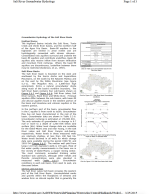
The Highland Basins include the Salt River, Tonto Creek and Verde River basins, and the northern half of the Agua Fria Basin. Basin-fill aquifers in the highlands are limited in areal extent and are hydrologically connected with stream alluvium. Consolidated rock aquifers surround and underlie the basin-fill aquifers and contribute underflow. Basin-fill aquifers also receive inflow from stream infiltration and mountain front recharge. Where the basin-fill aquifers are discontinuous, underflow between them may be restricted (Anderson, et al., 1992).